

Pest library · Blattodea
Cockroach Control in Delaware
Which roach you have decides everything. German cockroaches multiply inside kitchens; the large ones usually come up a drain from somewhere else.
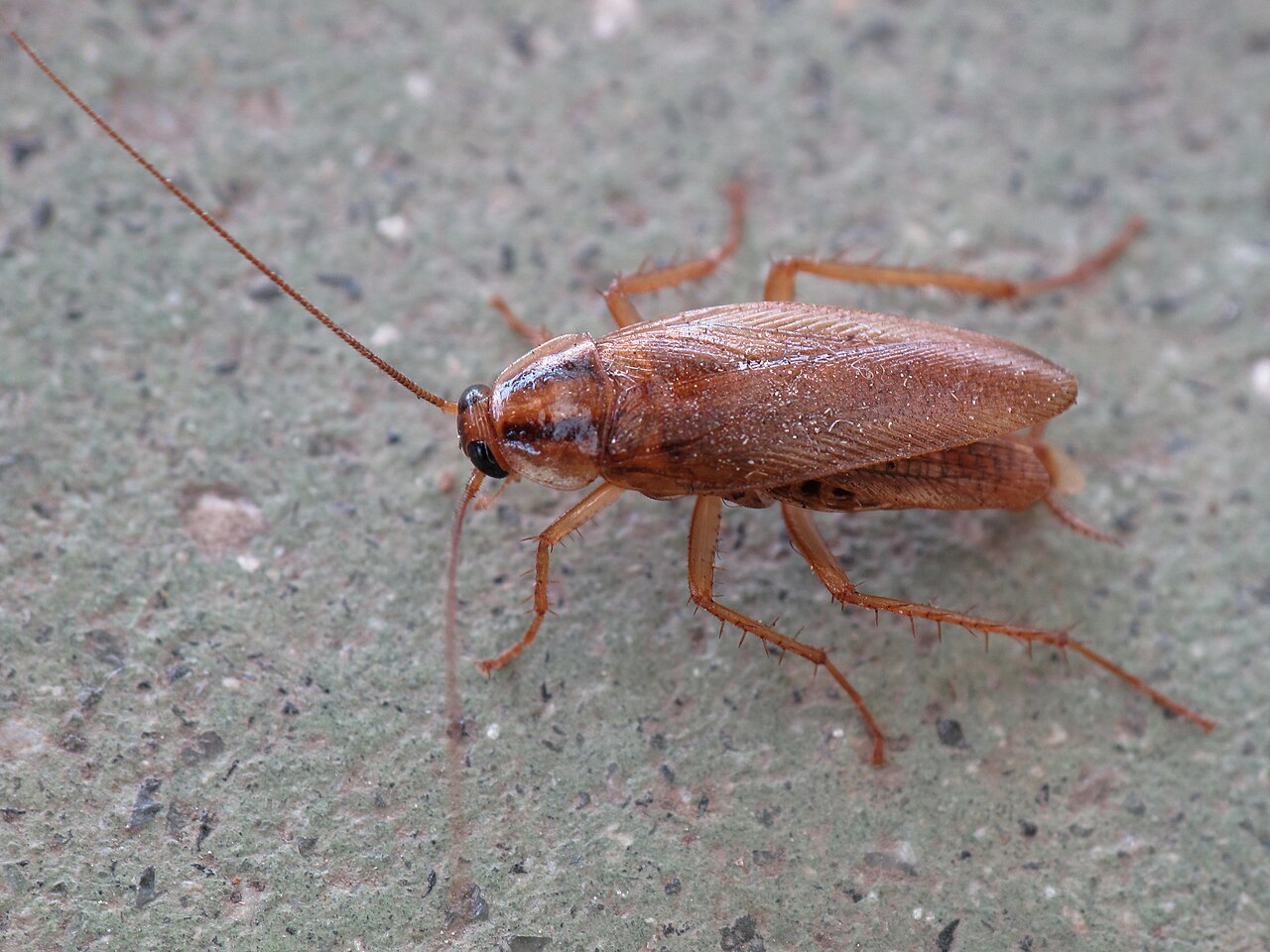
What cockroaches look like
Three species account for nearly all cockroach work between Milford and Middletown. They differ in size, habits and treatment, so telling them apart comes first.
- German cockroach (Blattella germanica) — about half an inch, light tan to brown, with two dark parallel stripes running lengthwise on the shield behind the head. Adults have wings but seldom fly. This is the species that breeds indoors and becomes an infestation.
- American cockroach (Periplaneta americana) — one and a half to two inches, reddish brown, with a pale yellowish margin around the shield. It flies short distances in warm weather, and is often called a water bug.
- Oriental cockroach (Blatta orientalis) — around an inch, glossy dark brown to near black, slow moving. Females have short wing pads and cannot fly. It prefers cool damp places and smells musty in numbers.
Nymphs are wingless and smaller but otherwise resemble the adults, and German nymphs carry the two dark stripes from an early stage. Egg cases help too: German cases are small, tan and carried by the female until nearly hatching, while American and Oriental cases are dark, bean-shaped and left in cracks.
Seeing one German cockroach in daylight generally means a substantial hidden population. They are nocturnal and avoid open space, so daytime activity indicates harborage is crowded.
How they get in
German cockroaches almost never walk in from outside. They arrive carried in: grocery bags and cardboard, used appliances, secondhand furniture and electronics, moving cartons, and through shared walls and utility chases in apartments and townhomes. Once inside they stay inside, because a heated building supplies everything they need year round.
American and Oriental cockroaches come the other way. They live in sewers, storm drains, wet mulch and crawlspaces, and enter through floor drains with dry traps, sump pits, unsealed pipe penetrations, gaps under doors and crawlspace vents. Heavy rain and summer heat push them up in numbers, which is why a basement in Dover can produce several large roaches in a week and none the rest of the year.
What holds them once they are inside
- Warmth and tight harborage: motor housings on refrigerators and dishwashers, the void under a sink cabinet, cardboard, wall voids near plumbing
- Standing water and condensation — cockroaches survive far longer without food than without water
- Grease films behind and beneath appliances, and food debris in floor seams and drain lines
- Clutter, especially corrugated cardboard, which they both hide in and feed on
What they do
Cockroaches are one of the few household pests where the health concern is legitimate rather than exaggerated. They move between drains, waste and food surfaces, and can mechanically carry bacteria on their bodies and in their droppings. The better documented issue is allergenic: droppings, shed skins and body fragments break down into house dust and are a recognized trigger for asthma and allergic symptoms, particularly in children. That risk scales with population, so a heavy German cockroach infestation matters far more than one large roach in a basement.
Practical damage is limited. They contaminate food-contact surfaces, leave dark specks of fecal material along harborage edges, and produce a musty odor at high density. They stain paper and fabric, and occasionally short out electronics.
Finding them has inspection value too. A steady supply of American cockroaches usually means a failed drain trap, a broken sewer line or a wet crawlspace. Bites are essentially unheard of; cockroaches are not aggressive and have no interest in people.
When you see them in Delaware
German cockroaches have no season. They live entirely within heated buildings, breed continuously, and are as active in January as in August. A population found in February started well before February — reproduction indoors does not pause for weather, and numbers build until something interrupts them.
The large species do follow the calendar. American and Oriental cockroaches become noticeable from late spring as soil and sewer temperatures rise, and peak through the humid stretch from June into September. Heavy thunderstorms flood drainage systems and push them up through floor drains and sump pits, so calls cluster after rain. Along the drainage ditches and low ground of central Kent County, wet summers produce more of them.
Fall brings a second push. As nights cool in October they move toward heated structures, entering basements and crawlspaces before hard frost. After frost, roughly November, outdoor populations go quiet, and anything still turning up indoors is either living in the building or coming from a sewer that never gets cold.
German vs American cockroach
These two get confused constantly, usually because a homeowner sees a small roach and assumes it is a juvenile of the big kind. They are different species with different problems attached.
- Size — German adults are about half an inch, American adults one and a half to two inches. No overlap in adults.
- Markings — German: two dark parallel stripes on the shield behind the head. American: a pale yellowish band outlining that shield.
- Where found — German cockroaches stay close to food and water, so kitchens and bathrooms. American cockroaches turn up in basements, garages, drains and crawlspaces.
- What it means — German cockroaches indicate indoor breeding. American cockroaches usually indicate an entry route from a drain, sewer or damp exterior area.
- Rate — a German female produces successive egg cases with dozens of nymphs each, and generations overlap quickly. American cockroaches develop far more slowly and rarely build large indoor populations.
A small brown roach with stripes is not a baby American cockroach. It is a German cockroach, and it means an established infestation rather than an incidental one.
How to keep them out
Prevention differs by species, but sanitation and moisture control work against all three.
- Unpack deliveries and remove cardboard from the house rather than storing it in a pantry or garage.
- Inspect used appliances, furniture and electronics before bringing them in, especially motor compartments.
- Clean grease and debris behind and beneath the range, refrigerator and dishwasher, and clear food from floor seams.
- Fix leaking traps, running toilets and condensation, and dry sinks at night. Water is the limiting resource.
- Pour water down seldom-used floor drains to keep the trap sealed, and fit covers where large roaches enter.
- Seal pipe penetrations, sump lids and crawlspace vents, and replace failed weatherstripping under doors.
- Keep mulch, leaf litter and firewood off the foundation, since Oriental cockroaches harbor in damp debris.
In apartments and townhomes, exclusion means treating shared walls, plumbing chases and adjacent units as part of the problem. A single unit treated alone gets reinfested from next door, which is why multi-unit properties are better served by a building-wide commercial pest control program.
How we treat cockroaches
We inspect and identify the species before treating anything, because German cockroach work and large-roach work look nothing alike. Inspection means checking harborage directly: under and behind appliances, inside motor housings, under sinks, along cabinet seams, in floor drains and sump pits. We place monitoring traps to map where activity is concentrated, since visible roaches badly understate a population.
For German cockroaches, treatment is gel bait placed precisely at harborage edges, an insect growth regulator to break the reproductive cycle, and vacuuming to remove live insects, egg cases and allergen-laden debris. Broadcast sprays are avoided: they repel cockroaches away from bait and scatter them deeper into voids. Sanitation and moisture correction are part of the plan rather than advice attached to it, because bait competing with grease under a range works slowly.
For American and Oriental cockroaches, the work is mostly exclusion and source reduction: closing the entry route, correcting dry or damaged drain traps, addressing crawlspace or basement moisture, and treating the exterior perimeter. Interior treatment alone does not stop a structure that keeps admitting them.
Follow-up is not optional here. Egg cases are shielded from most treatments, so a second and often third visit catches nymphs as they hatch, replaces monitors and confirms counts are dropping. For ongoing pressure we fold roach monitoring into a regular general pest control schedule; properties with several pests at once frequently see ants in the same areas for the same moisture reasons.
Cockroaches FAQs
Does seeing one cockroach mean I have an infestation?
It depends on the species. One large reddish brown American cockroach in a basement is often a single insect that came up a drain. One small striped German cockroach in a kitchen usually means a breeding population is already established, because they are nocturnal and stay hidden.
What is the difference between a German and an American cockroach?
German cockroaches are about half an inch, tan, with two dark stripes behind the head, and they breed indoors in kitchens and bathrooms. American cockroaches are one and a half to two inches, reddish brown with a pale band around the shield, and typically enter from sewers, drains or damp exterior areas. The small striped ones are not juveniles of the large species.
Are cockroaches dangerous to health?
They can mechanically carry bacteria from drains and waste onto food surfaces, and their droppings and shed skins are a recognized trigger for asthma and allergy symptoms, particularly in children. The allergen risk rises with population size. They do not bite.
Why do I get big cockroaches in my basement after it rains?
Heavy rain floods storm sewers and drainage systems, pushing American and Oriental cockroaches up through floor drains, sump pits and pipe penetrations. Dry or damaged drain traps make it easy for them. Keeping traps filled with water and sealing penetrations usually reduces it sharply.
Do cockroach bombs or foggers work?
Foggers generally make German cockroach problems worse. The mist does not reach the voids and motor housings where roaches actually harbor, and the repellent effect scatters them deeper into the structure and into neighboring rooms or units. Targeted gel bait placed at harborage works far better.
How long does it take to get rid of German cockroaches?
Most jobs take several weeks and at least two or three visits, because egg cases are shielded from treatment and must be allowed to hatch. Monitoring traps are used to confirm numbers are falling rather than relying on sightings. Sanitation and moisture correction significantly affect the timeline.
Do cockroaches go away in winter in Delaware?
German cockroaches do not. They live entirely inside heated buildings and breed year round. Outdoor populations of American and Oriental cockroaches go quiet after hard frost, usually in November, though sanitary sewers stay warm enough to support them.
Where we treat
Cockroaches control across Delaware
- Claymont, DE
- Hockessin, DE
- Wilmington, DE
- Newark, DE
- New Castle, DE
- Bear, DE
- Delaware City, DE
- Odessa, DE
- Middletown, DE
- Townsend, DE
- Smyrna, DE
- Clayton, DE
- Kenton, DE
- Cheswold, DE
- Hartly, DE
- Little Creek, DE
- Dover, DE
- Wyoming, DE
- Camden, DE
- Marydel, DE
- Magnolia, DE
- Viola, DE
- Frederica, DE
- Felton, DE
- Harrington, DE
- Milford, DE
- Houston, DE
- Lincoln, DE
- Greenwood, DE
- Ellendale, DE
- Bridgeville, DE
- Seaford, DE
- Bethel, DE
- Laurel, DE
- Delmar, DE
Get on the schedule
Dealing with cockroaches?
Send a photo and a few details. Correct identification is free and it changes the treatment.