

Pest library · Cimex lectularius
Bed Bug Control in Delaware
Bed bugs arrive on luggage, used furniture and shared walls. They have nothing to do with how clean a home is, and they are not known to transmit disease to people.
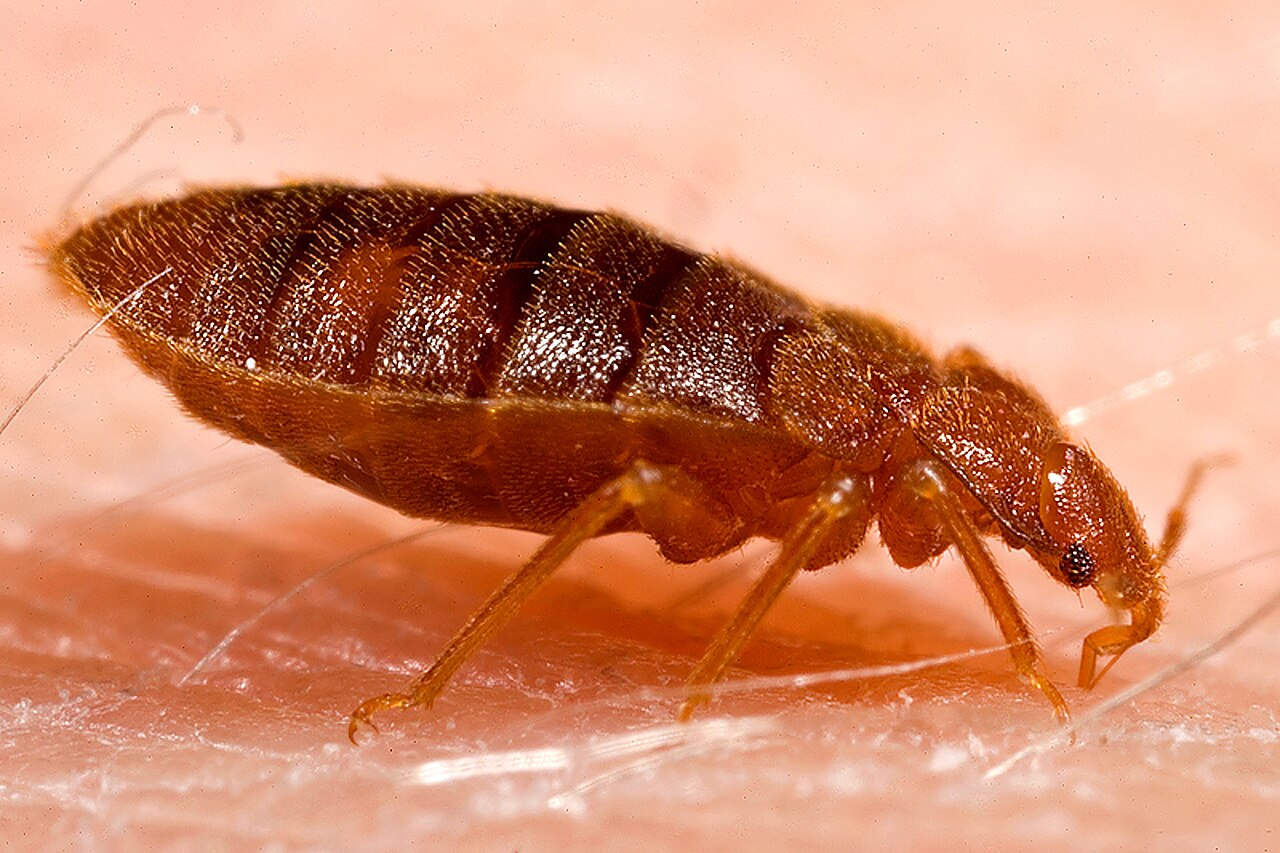
What bed bugs look like
Adult bed bugs (Cimex lectularius) are about 4 to 5 millimeters long - roughly the size and color of an apple seed. Unfed they are flat, broadly oval and mahogany brown; after a blood meal the body elongates and swells and the color darkens. They have six legs, short antennae, no functional wings, and a shield-like pronotum with a flared, finely haired margin.
The immature stages and the debris are what people actually find.
- Eggs. About a millimeter, pearly white, oval and cemented in place in tight seams. Hard to see against light fabric, and they hatch in roughly one to two weeks.
- Nymphs. Five stages, from about a millimeter to near adult size. Unfed nymphs are translucent and straw-colored; after feeding the blood meal shows through as a dark red mass.
- Cast skins. Each molt leaves an empty amber shell holding the shape of the insect. These accumulate in harborage and are often the clearest evidence available.
- Fecal spotting. Digested blood as small black or dark brown dots that bleed slightly at the edges on fabric, like ink on a napkin.
Inspection works outward from the mattress seams and tag to the box spring, then frame joints and bolt holes, the headboard, and baseboard near the bed.
How they get in
Bed bugs do not fly, do not jump, and do not come in from the yard. They are carried. Every infestation began with an insect or an egg arriving on something.
- Luggage and bags picked up in hotels, rentals, dorms, hospitals or any shared sleeping space.
- Used furniture - especially mattresses, box springs, upholstered chairs and wooden bed frames - and curbside items.
- Moving boxes, storage units, and belongings returning from a home that had activity.
- Wall voids, plumbing chases and outlet boxes in apartments and condos, which is how a neighboring unit's problem becomes yours through no action of your own.
Bed bugs are not a sanitation problem. They feed on blood, not crumbs, so clutter gives them more places to hide but has nothing to do with whether they arrive. Immaculate homes get them. We say so plainly because embarrassment is the most common reason people wait.
What they do
Bed bugs feed on blood, usually at night while someone is asleep. A feed takes several minutes, after which the insect returns to harborage. Most people never feel it.
Reactions vary enormously. Some people develop raised, itchy welts within a day, some react days later, and a substantial share show no visible reaction at all. That is why bites are poor evidence, and bite patterns - including the line about bites in rows of three - are not diagnostic.
On health risk the accurate statement is short: bed bugs are not known to transmit disease to people. The concerns that do come up are secondary skin infection from scratching and, in rare heavy infestations, anemia in vulnerable individuals.
The underrated effect is on sleep. An unresolved problem produces sleep loss and hypervigilance, which is worth naming without dramatizing. It is also the reason to treat on evidence and a plan rather than on fear.
When you see them in Delaware
Bed bugs are an indoor pest with no meaningful weather seasonality here. Heated homes hold a stable temperature year-round, so unlike stink bugs and other overwintering insects, bed bugs get no seasonal break. What varies is human movement.
- Summer. The heaviest travel period, including beach rentals and shore traffic through the state. Introductions rise with nights spent in beds other than your own.
- Late August and September. College move-in and the general moving season, when secondhand furniture also changes hands heavily.
- November and December. Holiday travel and house guests, usually followed by a wave of January calls.
- Any time. Multifamily buildings run on their own schedule, driven by turnover and activity in neighboring units.
A population left alone grows slowly at first and then faster. Finding evidence in the first weeks is a smaller job than finding it after six months, which is the only urgency argument worth making.
Bed bugs vs carpet beetles and bat bugs
Two look-alikes account for most misidentifications, and both change the response.
Carpet beetles
Adult carpet beetles are 2 to 3 millimeters, rounded rather than flat-oval, hard-shelled and mottled or solid dark, and they fly. The larvae are elongated, bristly and banded, and they also leave cast skins, which is where the confusion starts. They feed on wool, hair, feathers, lint and dead insects, so they turn up in closets, along carpet edges and in vents, and their shed hairs cause irritation mistaken for bites. Carpet beetle skins are hairy and elongated; bed bug skins are smooth, flat and clearly bug-shaped.
Bat bugs
Bat bugs (Cimex adjunctus) are near-identical to the naked eye. Separating them takes magnification: the fringe hairs on the edge of the pronotum are longer on a bat bug, roughly as long as the width of an eye. It matters because bat bugs indicate a bat roost in an attic, chimney or wall void, and treating the bedroom will not resolve that. The roost has to be addressed, which is a job for wildlife removal, timed around bat maternity season.
Fleas are the third mix-up: flattened side to side rather than top down, and they jump. If a dog or cat is in the house, rule out fleas first.
How to keep them out
Prevention here is interception, not exclusion. There is no gap to seal.
- Traveling. Put luggage in the bathtub or on a hard rack away from the bed, then check mattress seams, the tag area, the box spring edge and the headboard before unpacking.
- Coming home. Unpack away from the bedroom and run clothing through a hot dryer cycle. Dryer heat is effective against all life stages; washing alone is less reliable.
- Used furniture. Inspect seams, joints, staple lines and undersides in daylight before it enters the house. Curbside mattresses and upholstered furniture are not worth the risk.
- At home. Zippered encasements trap anything already in the mattress and make inspection easier. Keep the frame clear of the wall, skip floor-length bed skirts, and put interceptor cups under the legs as monitors.
- Apartments and condos. Report suspected activity early. A single-unit treatment beside an untreated neighbor rarely holds.
Reducing clutter around the bed helps by removing harborage and making inspection possible. It is not a moral matter and it is not the cause of the problem.
How we treat bed bugs
We do not treat on bite reports alone; bites are not diagnostic. Confirmation means a specimen or clear physical evidence - live insects, eggs, cast skins or fecal spotting - found during inspection. Where evidence is ambiguous, monitors go in and we reassess. The process is set out on our bed bug treatment page.
Conventional treatment
Conventional work is a targeted application to harborage: mattress and box spring seams, frame joints and bolt holes, headboard, furniture seams and baseboard, combined with vacuuming and, where appropriate, directed steam. It usually takes two to four visits about two weeks apart, because eggs are not reliably killed by residual products and hatch over one to two weeks. Furniture stays, and the residual keeps working between visits.
Heat treatment
Heat raises a room or unit into a lethal temperature range and holds it there, with fans driving heat into harborage rather than just warming the room. Done properly it kills every life stage, eggs included, in one treatment. The limits are worth knowing: it leaves no residual, so a reintroduction next week starts over; cold pockets behind heavy furniture and in dense clutter survive when airflow is inadequate; heat-sensitive items must be removed first; and the space is vacated for most of a day. We often pair it with a limited residual application at the perimeter.
Preparation and follow-up
Preparation is real work, and we say so up front: launder and dry bedding and nearby clothing on high heat, reduce clutter, and provide access to the frame, baseboard and closets. Do not move belongings into another room - that is the most common way a one-room problem becomes a whole-house problem - and do not use store foggers, which scatter bugs into new harborage. Interceptors stay under the bed legs as monitors and we re-inspect after the last treatment. A job is closed when no live insects, spotting or fresh cast skins appear over a monitoring period, not on the day the bites stop. If you cannot identify what you have found, send a photo through our contact page.
Bed Bugs FAQs
Do bed bugs mean my house is dirty?
No. Bed bugs feed on blood, not food waste, and they arrive by being carried in on luggage, used furniture or through shared walls. Spotless homes and hotels get them regularly. Clutter gives them more places to hide, but it has nothing to do with whether they show up.
Do bed bugs carry disease?
Bed bugs are not known to transmit disease to people. The practical concerns are secondary skin infection from scratching and, in rare heavy infestations, anemia in vulnerable individuals. Sleep loss and anxiety from an unresolved infestation are real effects and are worth taking seriously.
What do bed bug eggs look like?
They are about a millimeter long, pearly white, oval, and cemented in place, usually in clusters tucked into seams and crevices. They are very hard to see against light-colored fabric. Eggs hatch in roughly one to two weeks, which is why treatment schedules are built around a second and sometimes third visit.
Is heat treatment better than conventional bed bug treatment?
Heat kills all life stages including eggs in one treatment, which conventional treatment cannot do, but it leaves no residual protection and can miss cold pockets in clutter or on exterior walls. Conventional treatment takes two to four visits and leaves a residual that keeps working. Which one fits depends on the building, the level of activity and the amount of clutter.
Can I tell I have bed bugs from bites?
Not reliably. Reactions vary from severe welts to nothing at all, they can be delayed by days, and bite patterns are not diagnostic despite what is commonly repeated. Confirmation needs a specimen or physical evidence such as cast skins, eggs or fecal spotting.
Are these bed bugs or carpet beetles?
Carpet beetle adults are small, rounded and hard-shelled, and they fly; bed bugs are flat, oval and wingless. The confusion usually comes from cast skins, since both leave them. Carpet beetle larval skins are elongated and hairy, while bed bug cast skins are smooth, flat and clearly bug-shaped.
Should I throw out my mattress?
Usually not. A mattress and box spring can normally be treated and then fitted with zippered encasements, which trap anything remaining and make future inspection much easier. Discarding a mattress without treating the room leaves the rest of the population in place, and moving a used mattress out through a building can spread the problem.
How long does it take to get rid of bed bugs?
A conventional program typically runs two to four visits spaced about two weeks apart, because eggs hatch over one to two weeks and the emerging generation has to be caught. Heat can resolve a population in one treatment but still needs follow-up monitoring. Either way, the job is closed after a monitoring period with no evidence, not on the day the bites stop.
Where we treat
Bed Bugs control across Delaware
- Claymont, DE
- Hockessin, DE
- Wilmington, DE
- Newark, DE
- New Castle, DE
- Bear, DE
- Delaware City, DE
- Odessa, DE
- Middletown, DE
- Townsend, DE
- Smyrna, DE
- Clayton, DE
- Kenton, DE
- Cheswold, DE
- Hartly, DE
- Little Creek, DE
- Dover, DE
- Wyoming, DE
- Camden, DE
- Marydel, DE
- Magnolia, DE
- Viola, DE
- Frederica, DE
- Felton, DE
- Harrington, DE
- Milford, DE
- Houston, DE
- Lincoln, DE
- Greenwood, DE
- Ellendale, DE
- Bridgeville, DE
- Seaford, DE
- Bethel, DE
- Laurel, DE
- Delmar, DE
Get on the schedule
Dealing with bed bugs?
Send a photo and a few details. Correct identification is free and it changes the treatment.