

Pest library · Ctenocephalides felis
Flea Control in Delaware
Nearly every flea in a Delaware home is the cat flea. Most of the population is eggs, larvae and cocoons down in the flooring, which is where control has to be aimed.
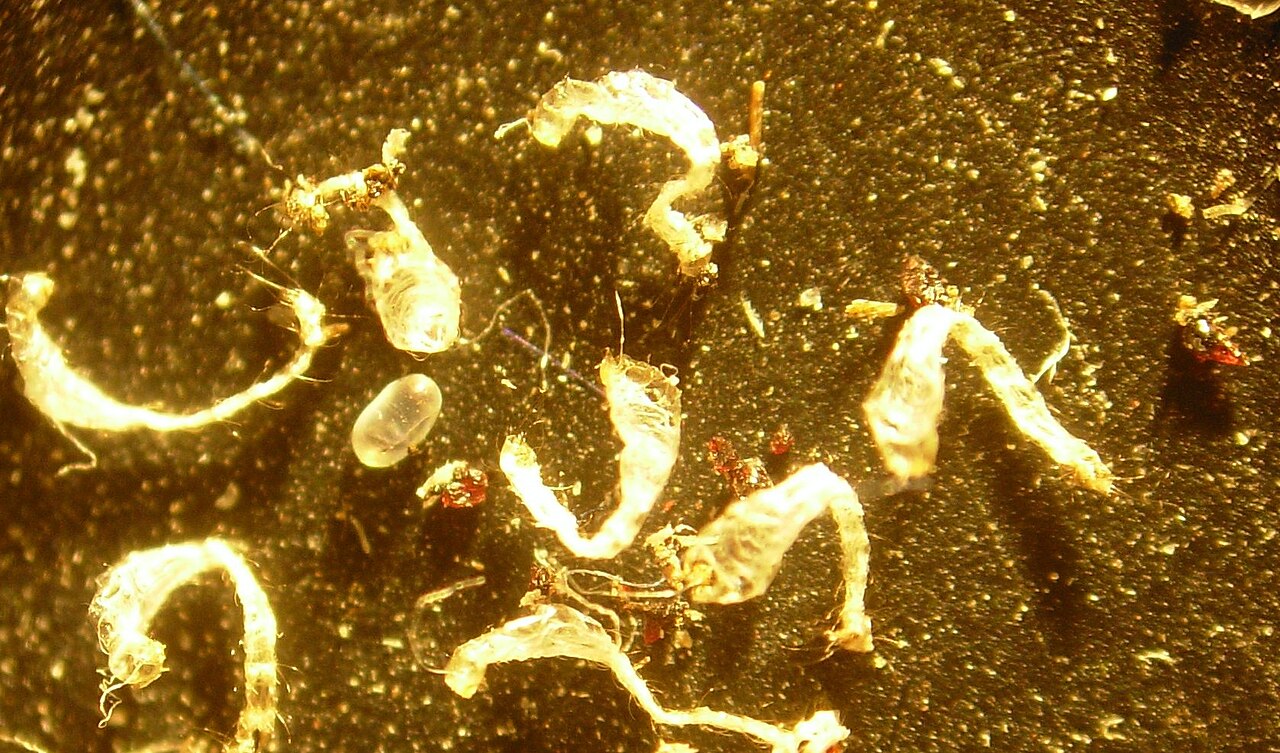
What fleas look like
Nearly every flea we find on a Delaware dog or cat is the cat flea, Ctenocephalides felis. Despite the name it is the ordinary flea of both species. Adults are a sixteenth to an eighth of an inch, dark reddish brown, and flattened side to side rather than top to bottom, which lets them slide through hair instead of being brushed out.
They have no wings, and the heavy back legs are built for jumping. Under a hand lens you can see two rows of dark spines, called combs, across the face and behind the head.
The three stages you never see
Adults are the smallest part of an infestation. A female feeds within minutes of reaching an animal and lays smooth white eggs that do not stick to the coat. They roll off wherever the animal sleeps or scratches and hatch into legless, bristly larvae that avoid light and work down into carpet pile, floorboard cracks and upholstery seams.
Larvae feed on flea dirt, the dried blood passed by adults. A mature larva then spins a silk cocoon that picks up dust and fiber at once, making it nearly invisible and hard to reach. The adult inside can wait weeks, emerging in response to warmth, carbon dioxide and vibration.
This is why fleas seem to come back. Treatment reaches adults and larvae, but cocooned pupae are shielded. A wave of new adults a week or two after service is those cocoons hatching on schedule.
- Fine black specks in pet bedding that smear rust red on a damp paper towel. That is flea dirt.
- An animal scratching, biting at the base of the tail, or thinning hair along the lower back.
- Small, hard, itchy bites clustered on ankles and lower legs.
- Fleas on white socks after ten minutes standing in an infested room.
How they get in
A flea problem almost always arrives on an animal, and the animal is not always yours.
Wildlife leaves flea populations behind under decks, in crawlspaces and inside sheds. Feral cats, raccoons, opossums and squirrels all carry cat fleas, and all of them shelter in the vented crawlspaces common around Camden and Wyoming. The animal moves on; the eggs, larvae and cocoons stay in the dust. When a home keeps producing fleas with no pet in it, we look under the structure first, and the fix is exclusion through wildlife removal, not more treatment inside.
- Dogs and cats returning from a yard, a walk, a kennel or a groomer.
- Wildlife denning under a deck, porch, shed floor or crawlspace and leaving the immature stages behind.
- Used rugs, upholstered furniture and secondhand pet beds carried in from elsewhere.
- A vacant house being reoccupied. A property that sat empty through a humid summer holds dormant pupae that emerge together once people walk the floors again.
What fleas do
For most people fleas are an itch rather than a danger, and it is worth being clear about that. Bites land on ankles and lower legs and itch for days. Some people barely react; others react strongly to flea saliva and get a rash out of proportion to the insects present.
Pets take the worse end of it. Flea allergy dermatitis is common and miserable: persistent scratching, hair loss along the lower back and tail base, and secondary skin infections. Fleas also transmit the common tapeworm of dogs and cats, swallowed while grooming. In kittens, puppies or a small elderly animal, a heavy infestation can cause anemia.
Fleas can carry organisms responsible for human illness, including the bacteria behind cat scratch disease and murine typhus. Those infections are uncommon here and we do not raise them to sell work. Fleas are a persistent nuisance and a real welfare problem for animals, not a serious health threat in most homes. Ticks are the biting pest here that genuinely warrants concern about disease.
When you see them in Delaware
Indoors, fleas are a year-round pest. A heated house holds them at breeding temperature straight through January, so a population that establishes in a carpet in October is still producing adults in February.
Outdoors the seasonality is real. Development stalls in cold soil, restarts as the ground warms through March and April, and accelerates through the humid Mid-Atlantic summer. The heaviest calls come from August through October, once a season of breeding has compounded. People assume flea season ends with the first cool nights. It does not, and the fall peak is usually the worst of the year.
Hard frost around November knocks down exposed outdoor stages, but sheltered spots do not freeze through. Crawlspaces and the dust under a deck carry larvae and pupae into winter.
Fleas vs bed bugs
These two get confused constantly, usually because someone wakes with bites and starts searching. The treatments have almost nothing in common.
- Size and shape. Fleas are narrow and flattened side to side. Bed bugs are about a quarter inch, oval and flattened top to bottom, like an apple seed.
- Movement. Fleas jump, and jump far. Bed bugs only crawl.
- Where they live. Fleas live on the animal and in the flooring where it sleeps. Bed bugs live in mattress seams, headboard joints and box spring corners, never on a host between meals.
- Bite pattern. Flea bites cluster below the knee, as high as they reach from the floor. Bed bug bites appear on skin exposed during sleep: arms, shoulders, neck and back.
- Evidence. Fleas leave black flea dirt in pet bedding. Bed bugs leave ink-like staining along seams, shed skins and a sweetish odor.
With no animal in the home and bites above the waist, we inspect it as a possible bed bug case. Bites alone never settle it. Mosquito, chigger and mite bites read similarly, and two people in one household can show different marks from the same insect. We identify the insect, not the bite.
How to keep them out
Prevention is mostly about the animal and the floor.
- Keep pets on a veterinarian-prescribed flea product year round. This is the most effective single step, and nothing we do indoors substitutes for it. Ask the vet; over-the-counter products vary widely.
- Vacuum often and thoroughly. Carpet, rugs, upholstery, baseboards and under furniture that never moves. It lifts out eggs and larvae, and the vibration prompts cocooned adults to emerge where they can be reached.
- Wash and dry pet bedding hot, weekly through the season.
- Close off crawlspace vents, deck skirting and shed gaps so wildlife cannot den under the structure.
- Thin dense shade and clear leaf litter where animals rest. Flea larvae need shade and humidity; open sun-baked lawn kills them.
Empty the vacuum canister or bag into an outdoor trash container after every session. Eggs and larvae survive a trip through a household vacuum perfectly well.
How we treat fleas
We start with inspection and identification. Flea dirt, larvae in carpet pile, and where activity concentrates tell us which rooms hold the population and whether the source is a pet, a crawlspace or wildlife under the structure. If it is wildlife, treating indoors accomplishes nothing until the animal is out and the access closed.
Treatment is aimed at where the immature stages live: carpet, rug edges, upholstery, pet resting areas and the perimeter of a room, not blanket application across open floor. We use an insect growth regulator alongside an adulticide, since the regulator stops eggs and larvae reaching adulthood and takes the next generation out of the cycle. Outdoors we treat shaded harborage under decks and at crawlspace access points, not open lawn where larvae do not survive anyway.
Then we monitor. We ask for thorough vacuuming before service and through the following two weeks, and we plan a follow-up visit timed to the pupae that hatch after the first treatment. A flea job that ends after one visit is usually a job that comes back.
We also say plainly what we do not do: we do not treat animals. That is veterinary work, and an untreated pet reseeds the house whatever we do to the structure. To fold flea work into general pest control, get in touch.
Fleas FAQs
How long do fleas live without a host?
An adult cat flea that has never fed can survive roughly a week off an animal, sometimes longer in cool, humid conditions. Once it has fed it depends on regular blood meals and dies within a few days without one. The cocooned pupal stage is the durable one and can wait months for a host to arrive.
Why do I still have fleas after treatment?
Almost always because pupae hatched after service. The silk cocoon shields the developing adult, so a new wave emerges over the following one to three weeks. Continued vacuuming and a scheduled follow-up visit are what handle that wave.
Can I get fleas if I don't have a pet?
Yes. Wildlife denning under a deck, porch or crawlspace leaves flea populations behind, and a previous occupant's pet can leave cocoons that hatch once the house is occupied again. In those cases the fix involves excluding the animal, not just treating floors.
Do fleas live in beds?
Not usually. Fleas concentrate where an animal sleeps, so a pet that sleeps on your bed will put them there; otherwise they stay in carpet, rugs and upholstery. Insects found in mattress seams with no pet in the house are more likely bed bugs.
Do flea bites look different from bed bug bites?
Location is a better clue than appearance. Flea bites cluster on ankles and lower legs, while bed bug bites appear on skin exposed during sleep such as arms, shoulders and neck. Skin reactions vary too much between people to identify an insect from bites alone.
Does vacuuming really help with fleas?
Yes, more than most people expect. Vacuuming removes eggs, larvae and flea dirt, and the vibration prompts cocooned adults to emerge where treatment can reach them. Empty the canister or bag into an outdoor container each time.
When is flea season in Delaware?
Outdoor activity builds from spring and peaks in late summer and fall, with August through October usually the heaviest stretch. Indoors, heated homes let fleas breed straight through winter. A population established in autumn will still be active in February.
Are fleas dangerous to people?
For most people they are an itchy nuisance rather than a health threat. They transmit tapeworm to pets and can carry organisms behind some uncommon human infections. The more serious problem is usually the animal's skin, where flea allergy dermatitis is common.
Where we treat
Fleas control across Delaware
- Claymont, DE
- Hockessin, DE
- Wilmington, DE
- Newark, DE
- New Castle, DE
- Bear, DE
- Delaware City, DE
- Odessa, DE
- Middletown, DE
- Townsend, DE
- Smyrna, DE
- Clayton, DE
- Kenton, DE
- Cheswold, DE
- Hartly, DE
- Little Creek, DE
- Dover, DE
- Wyoming, DE
- Camden, DE
- Marydel, DE
- Magnolia, DE
- Viola, DE
- Frederica, DE
- Felton, DE
- Harrington, DE
- Milford, DE
- Houston, DE
- Lincoln, DE
- Greenwood, DE
- Ellendale, DE
- Bridgeville, DE
- Seaford, DE
- Bethel, DE
- Laurel, DE
- Delmar, DE
Get on the schedule
Dealing with fleas?
Send a photo and a few details. Correct identification is free and it changes the treatment.